Saturday, October 13, 2012

The Panama Canal

 
The Panama Canal
Karissa Troyer
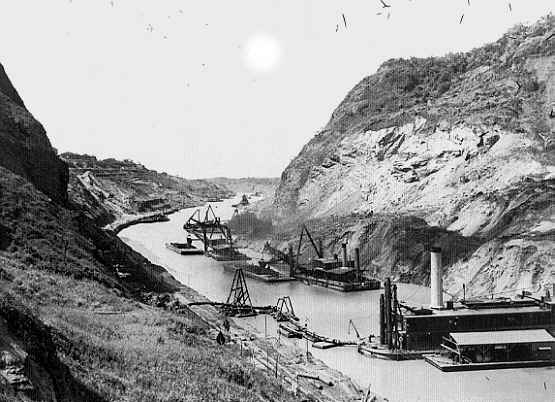
   The Panama Canal was made by people and not Mother Nature. The president at the time, Theodore Roosevelt, thought that it would be a good idea to make a canal through Central America. Roosevelt thought that having a strong military base was important, and building the canal was vital to America’s power in the world. The canal purpose was for military and commercial shipping. In 1901 Great Britain and America signed the Harry-Pauncefote Treaty. The treaty allowed the United States to build the canal through Central America.
   The U.S. had two places in mind of where they wanted to build the canal. One was through Nicaragua and the other was through Panama. When America started to build the canal many Panamanians revolted. The French were afraid that the U.S. would start to build the canal through Nicaragua so they made their own deal with them. To make sure that the Colombians wouldn’t interfere he had 10 U.S. warships off the coast. The canal was finished in 1913 and opened in 1914.

The Boxer Rebellion

 
The Boxer Rebellion
Paola Torres
 
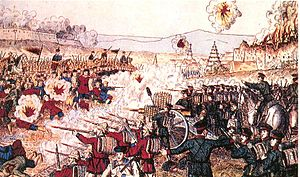
  After Japanese victory in the war between China and Japan over Korea, Chinese were forced to give Korea independence and give Japan territory in Manchuria. Russians were not very happy with this and with the support of France and Germany, forced the Japanese to return the territory, then demanded that China give them “leasehold” (China would keep ownership of territory but hand control to foreign country) over the territory. Soon after that, different countries such as Germany, France, and Britain also started demanding “leaseholds” over other Chinese territories that would give them control of the economic development of that specific territory.
 
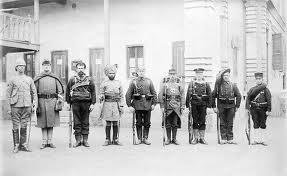
  Nearing the end of the 1800’s, there was a lot of western influence in China because of the territories other foreign countries had a lease on. Some of the Chinese called the westerners “foreign devils”. There was one group in particular called “The Harmonious Fists”, also known as, The Boxers; they wanted to get rid of foreigners and western influence more than anybody. In 1899, they began attacking foreigners, and either killing them or taking them hostage. By 1900, the boxer’s momentum had escalated and the situation reached its breaking point when the German ambassador to China was killed. The nations of Germany, Austria-Hungary, Britain, France, Italy, Japan, Russia, and the United States decided that enough was enough and an intervention was greatly needed. They gathered an army of about 50,000 and were successful in subduing the Boxers. Secretary of State John Hay convinced British diplomats to have China pay $450 million for damages instead of dividing it.


William Howard Taft

William Howard Taft
Paola Torres

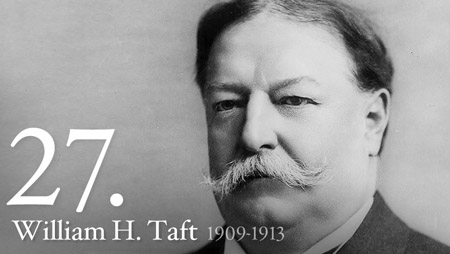
  William Howard Taft was the 27th president of the United States. He served his 4-year term from 1909 to 1913. He was never much of a politician and he preferred law to politics. Theodore Roosevelt made him the Secretary of War and then after that, in 1907, decided that Taft should be his successor. During his term, Taft worked to increase trade and influence in Latin America. The Latin American Nations weren’t too happy about the American influence entering their countries. Even though Taft was aware of this, he decided to continue his policies and focused on helping industry in Latin America grow; he thought that in doing this, nothing less of beneficial would come for both sides. Taft’s policy to help grow American trade and profits and help Latin America out of poverty became known as the “Dollar Diplomacy”.

T. Roosevelt

T. Roosevelt
Blake Mullet
 
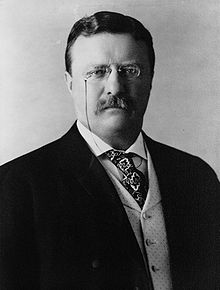
  Theodore Roosevelt was the 26th president. He was born in New York. Roosevelt only lived to be sixty years old. He was married to Edith and together they have six children. Since he took many trips to the Amazon, he died from having Cardiovascular disease.
 
  Roosevelt became president because the president before him got assassinated. He was known for his range of interests, goals and leadership of the progressive movement. At the age of 42, he became president and was the youngest person to become president. Theodore was the leader of the Republican party. He wanted to use the federal government to solve the economic and social problems. The power of the executive branch of government dramatically increased. William Taft worked closely with Theodore. Roosevelt believed that William would be the one to continue with his thoughts and beliefs.

Annexing Hawaii


Annexing Hawaii
Madison Normnent
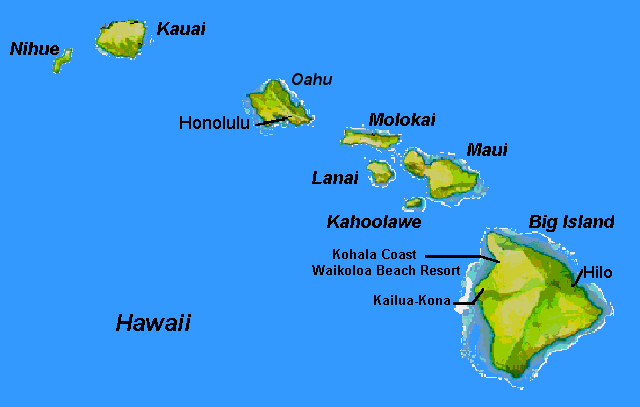
   As the trade with Asia grew in the 1800’s Americans were seeking ports to refuel and resupply while going over the Pacific. Pago Pago, Samoan Islands had one of the best Harbors in the South Pacific.
   In 1819 American Missionaries went to Hawaii where they found sugarcane. Sugarcane grew very well in Hawaii’s climate and many of the Americans began to make plantations. 1878 the United States had negotiated permission to open a base their. During 1872 a recession struck Hawaii, Hawaiians worried about the economic crisis. The United States signed a treaty exempting Hawaiian sugar from tariffs. A few years later their treaty was due for renewal. Senate insisted that Hawaii allow United States exclusive rights to naval base at Pearl Harbor. The renewed treaty led to great wealth with sugar plantation owners. In 1887 planters began to pressure the Hawaiian king into accepting constitution that limited his authority. Then in 1890 congress passed a new tariff. This new tariff gave subsidies to sugar producers in the U.S.. It made Hawaiian sugar more expensive than American.
   In 1891 Queen Liliuokalani left the Hawaiian throne. She didn’t like the influence that the American settlers had gained in Hawaii. January, 1893, Liliuokalani made a new constitution remaking her authority as ruler. A group of planters didn’t agree and in turn tried to overthrow monarchy. They were supported by marines from USS Boston who forced the Queen to step down. Then they set up a provisional government and asked the United States to annex Hawaii. President Cleveland opposed imperialism and withdrew the annexation treaty and tried to restore power to the queen. Hawaii’s new leader refused to do so and chose to wait for Cleveland to leave office. Five years later the United State annexed Hawaii.


Upton Sinclair

Upton Sinclair
Paola Torres
 
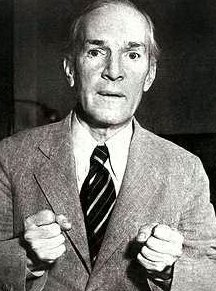
   Upton Sinclair was a writer that was born on September 20, 1978. He started writing to make a living at the young age of 15. His writing career consisted of works that talked about poor economic and social conditions, as well as injustices against the work force. When he was in his mid- to late 20’s, he started working undercover in the meatpacking industry in Chicago. After, he wrote a fictional book about his the observations he made while he was there called “The Jungle”. When he was finally done with his book he went to a publishing house, but his book was rejected; they thought it was too shocking for the public. He went to total of 5 different publishers before he gave up and decided to publish the book on his own. The people had a very strong reaction to Sinclair’s book; they were shocked and infuriated. Many people were disgusted with the news and even became vegetarians after that. After reading it, Roosevelt, along with congress, decided the Meat Inspection Act (1906). This act meant that federal inspection of meat sold through interstate commerce would be required and that the Agriculture department had to set cleanliness standards for meat packing companies. It also led to the Pure Food and Drug act which outlawed the sale, shipment, or production of any food or drugs that were contaminated or falsely labeled.

Child Labor

Child Labor
Madison Normenet

   Children had always worked on their family farms. But then they were moved in to mines, factories, textile mills, and department stores which presented more dangerous and unhealthy working conditions.

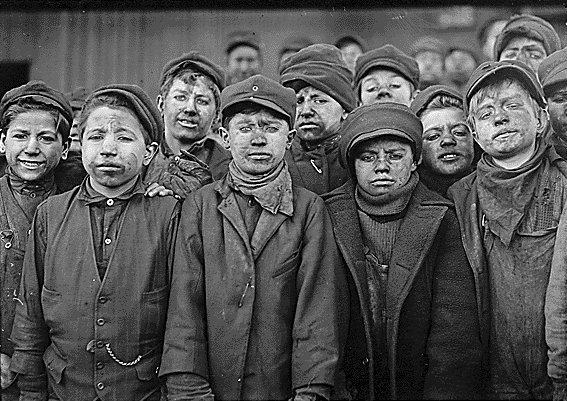
   In 1906 John Spargo wrote a book The Bitter Cry of the Children which gave evidence of child labor conditions. It told of coal mines that hired many nine or ten year old “breaker boys” to pick slag out of coal who only got paid sixty cents for a ten hour day. Work bent their backs permanently. Their hands were crushed, cut and bruised, and most often became crippled. Harsh fumes would be breathed in and some boys got caught in the machinery.

  There were boys from the ages of fourteen and fifteen who were taking risks as men.By 1910 two million children were working in these places.
Reports convinced states to pass laws that set a limit on the age for employment. It also established maximum hours that those children could work.